

Sustainability · 2025
In this section52 topics
- Sustainability Policy & Goals — Overview1 item
- Sustainability Policy3 items
- Sustainability Goals & UN SDGs3 items
- Policy Review2 items
- Business Value Chain1 item
- Stakeholder Analysis2 items
- Environmental Policy & Guidelines4 items
- Environmental Policy Review1 item
- Energy — Plan & Guidelines2 items
- Energy — Electricity Consumption1 item
- Energy — Fuel Consumption1 item
- Energy — Targets2 items
- Energy — Performance & Outcomes2 items
- Water — Plan & Guidelines2 items
- Water — Withdrawal, Discharge & Consumption1 item
- Water — Targets2 items
- Water — Performance & Outcomes2 items
- Waste — Plan & Guidelines2 items
- Waste — Generation, Disposal & Recycling1 item
- Waste — Targets2 items
- Waste — Performance & Outcomes2 items
- GHG — Plan & Guidelines2 items
- GHG — Emissions1 item
- GHG — Emissions Verification2 items
- GHG — Principles & Standards1 item
- GHG — Targets1 item
- GHG Targets — Other Targets1 item
- GHG — Performance & Outcomes2 items
- Environmental Legal Incidents1 item
- Other Environmental Management1 item
- Social Policy & Guidelines4 items
- Social Policy Review3 items
- Social — Principles & Standards Practised1 item
- Human Rights Due Diligence3 items
- Employees — Plan & Guidelines3 items
- Employees — Workforce3 items
- Employees — Remuneration & Provident Fund2 items
- Employees — Training & Development2 items
- Employees — Occupational Health & Safety2 items
- Employees — Labour Relations2 items
- Employees — Employee Representation3 items
- Employees — Targets2 items
- Employees — Performance & Outcomes2 items
- Customers — Plan & Guidelines3 items
- Customers — Satisfaction Results2 items
- Customers — Targets2 items
- Customers — Performance & Outcomes2 items
- Community & Social — Plan & Guidelines3 items
- Community & Social — Targets2 items
- Community & Social — Performance & Outcomes2 items
- Other Social Management1 item
- Law Violation Incidents1 item
Sustainability Policy & Goals — Overview
Introduction
To support the goal of conducting business with integrity for sustainable growth, the company adopts international standards for corporate social responsibility as a framework for defining strategies that consider environmental, social, and governance aspects (ESG). This aligns with the sustainable development goals of the United Nations (UN SDGs). The company has established a policy for sustainable development operations, prioritizing the analysis of sustainability contexts both internally and externally through impact analysis, and create balanced value across three dimensions: economic, social, and environmental, under good corporate governance. By integrating sustainable development concepts, the company fosters a holistic approach throughout the entire value chain, from sourcing products to storage and distribution, marketing and sales, product delivery, and post-sales services.
Sustainable Management Policy
Environmental |
Social |
Governance |
Sustainability Policy
Has a Sustainability Policy
Yes
Policy Description
Siam Global House Public Company Limited (the “Company”) places a strong emphasis on sustaining the organization through Environment, Social and Governance Framework: ESG Framework to efficiently and concretely implement the principles of sustainability in all aspects of the Company’s operations. Hence,
Policy Document Link
https://sustainability.globalhouse.co.th/en/document/viewer/23/sustainability-development-policy
Sustainability Goals & UN SDGs
Has Sustainability Goals
Yes
Goals Description
ESG Targets and Performance | 2023 | 2024 | 2025 | Target | Target Years |
Governance & Economic | |||||
Response Rate of Supplier ESG Assessments | 77.91% | 40.51% | 63.06% | 90% | 2025 |
Proportion of ESG Product Revenue to Total Sales Revenue | 33.73% | 42.20% | 45.28% | 50% | 2029 |
Customer Satisfaction - Product | 93.10% | 92.10% | 94.20% | 95% | 2025 |
Customer Satisfaction - Service | 92.80% | 92.10% | 93.90% | 95% | 2025 |
Environment | |||||
The proportion of renewable energy consumption | 52.87% | 46.88% | 45.61% | 63% | 2027 |
Solar power production quantity (kWh/year) | 83,037,916.04 | 82,863,304.64 | 85,250,324.83 | 100,000,000 | 2027 |
Energy consumption per area decreased from the base year. (The base year 2018) | - 4.40% | -0.64% | 1.59% | -7.00% | 2027 |
Amount of Greenhouse Gas Emissions on scope1 and Scope2 per total revenue, has decreased from the base year (%) (base year 2022) | 7.14% | 35.17% | 40.00% | -20.00% | 2030 |
Reduced water consumption per store from the base year (The base year 2018) | -8.16% | -13.70% | 0.02% | -10.00% | 2027 |
The amount of waste sent to landfill (Metric ton) | 184 | 272 | 365 | 0 | 2030 |
Social | |||||
Development of knowledge and skills per total number of employees (%) | 89% | 81% | 89% | >70% | Every year |
Average number of training hours of all employees (hours per person) | 8.27 | 8.1 | 8.78 | >8.5 | 2025 |
Employee Engagement (%) | 92.93% | 92.39% | 91.13% | >90% | 2025 |
Lost time Injury Rate per store | 1.27 | 0.84 | 0.84 | <1.0 | 2025 |
Reduced lost time injury frequency rate (LTIFR) | 3.98 | 2.69 | 2.70 | <1.0 | Every year |
Work-Related Fatality rate (person) | 0 | 0 | 0 | 0 | Every year |
Occupational illness frequency rate (OIFR) (person) | 0 | 0 | 0 | 0 | Every year |
The employment of disabled persons (person) | 102 | 107 | 113 | 120 | 2025 |
Number of technicians in the Chang-Dee project (persons) | 3,650 | 3,790 | 3,970 | 4,200 | 2029 |
UN Sustainable Development Goals
| SDG Goal |
|---|
| Goal 1 No Poverty |
| Goal 2 Zero Hunger |
| Goal 3 Good Health and Well-being |
| Goal 4 Quality Education |
| Goal 5 Gender Equality |
| Goal 6 Clean Water and Sanitation |
| Goal 7 Affordable and Clean Energy |
| Goal 8 Decent Work and Economic Growth |
| Goal 9 Industry, Innovation and Infrastructure |
| Goal 10 Reduce Inequalities |
| Goal 11 Sustainable Cities and Communities |
| Goal 12 Responsible Consumption and Production |
| Goal 13 Climate Action |
| Goal 14 Life below Water |
| Goal 15 Life on Land |
| Goal 16 Peace, Justice and Strong Institutions |
| Goal 17 Partnerships for the Goals |
Policy Review
Policy Reviewed This Year
Yes
Policy Changed This Year
No
Business Value Chain
Value Chain Description
The company has its intention to be creator of products and services innovation for habitation with supporting and improving the people’s well-being in the society, together with social responsibility (Smart Living Solutions) The company gives the importance to all processes of business both Supply Chain and Value Chain, including operate business fairly and responsible to all stakeholders.
Stakeholder Analysis
Introduction
Stakeholders Engagement
The company has analyzed and identified the important stakeholders include gives the importance to all stakeholders’ engagement both internal and external by communicating and listening its opinions through channels and take into account the stakeholder expectations to properly response their needs and expectations.
Stakeholder Analysis
| Stakeholder Type | Stakeholders | Stakeholder Expectations | Response to Expectations | Communication Activities |
|---|---|---|---|---|
| External stakeholders | 2923 · Description: Customers | 1. Products responsible for the community, Society and Environment.
2. Good quality and reasonable price.
3. Safety products and services.
4. After-sales services
5. Easy and convenient to access products and service.
6. Clearly communication in products details.
7. Complaints handling and management.
8. Personal Data Protection.
| 1. Procurement of Eco Product.
2. Distribution the product having standard and safety.
3. Develop distribution channels of products and services.
4. Fast and Effective in complaints.
5. Treatments both before and after sales including giving service equally.
6. Developing Customer Data Protection System.
| 2941 · Description: Online Communication · 2945 · Description: Complaint Reception · 2947 · Description: Satisfaction Survey |
| Internal stakeholders | 2921 · Description: Employees | 1. Proper Compensation and welfares
2. Good quality of life and safety at work
3. Career Advancement and Security
4. Improvement of skill, knowledge and ability in working
5. Practice toward employees by adhering to human rights.
6. Personal Data Retention
| 1. Employee Engagement Activities with the company
2. Security and Career growth
3. Receiving fair compensation, including employee welfare at an appropriate level
4. Safe and healthy working environment.
5. Receiving training in skills related to duties and responsibilities
6. Establishing an Occupational Health and Safety policy
| 2941 · Description: Online Communication · 2942 · Description: Internal Meeting · 2946 · Description: Employee Engagement Survey |
| External stakeholders | 2899 · Description: Suppliers | 1. Fair trade
2. Increasing of Purchase Volume
3. Suppliers Development
4. Growth together in business
| 1. Operates business with ethics and code of conduct
2. Cooperates to develop products
3. Treats suppliers equally
4. Have clearly purchasing process
5. Follows the trading terms and conditions.
6. Independent and Fair-trade competition
| 2938 · Description: Visit · 2941 · Description: Online Communication |
| External stakeholders | 2936 · Other name: Community and Society · Description: Others | 1. Operate business with safety and social responsibility
2. Participation and supporting in community’s activities
3. Community Improvement
4. Employment/Hiring
| 1. Participate in activities for supporting community’s culture.
2. Encourage occupation of people in community
3. Listening opinions and suggestions of community
4. Save important ecology of the community around the store
| 2940 · Description: Social Event · 2945 · Description: Complaint Reception · 2949 · Other name: Area Survey and Public hearing with community · Description: Others |
| External stakeholders | 2931 · Description: Government agencies and Regulators | 1. Law compliance
2. Participation in the projects
| 1. Support and strictly comply with laws and regulations.
2. Giving cooperation in government sector’s activities
| 2941 · Description: Online Communication |
| External stakeholders | 2913 · Description: Shareholders | 1. continuously growing performance
2. Investment return
3. Management with corporate governance and accountability
| 1. Comply with good corporate governance principle
2. Develop communication channels with various shareholders/institutional investors.
| 2939 · Description: Press Release · 2941 · Description: Online Communication · 2944 · Description: Annual General Meeting (AGM) |
| External stakeholders | 2894 · Description: Creditor | 1. Cooperation in financial transaction.
2. Follows the conditions in agreement
3. Growth together in business
| 1. Strictly comply with conditions and agreement
2. Making a contract legally and transparent
| 2941 · Description: Online Communication |
| External stakeholders | 2898 · Description: Competitors | 1. Fair Competitions
2. Non infringement of intellectual property
| 1. Operates business with ethics and code of conduct
2. Fair and transparence in business competitions
| 2941 · Description: Online Communication |
Environmental Policy & Guidelines
Has an Environmental Policy
Yes
Policy Description
The Company emphasizes on business operations and growth together with environmental management. Although the business operations have no direct impacts on the environment or produce pollution like factory, anyway, the company realizes to the importance of environmental care. Managing the efficient use of resources to reduce and prevent impacts on the environment causing from the operations of the company by setting “Environmental Policy” to be guideline in operations with environmental responsibility.
Policy Document Link
https://sustainability.globalhouse.co.th/en/document/viewer/24/environmental-management-policy
Environmental Guidelines
| Guideline |
|---|
| Electricity Management |
| Fuel Management |
| Renewable/Clean Energy Management |
| Water Management |
| Waste Management |
| Biodiversity Management |
| Greenhouse Gas and Climate Change Management |
| Air Quality Management |
Environmental Policy Review
Policy Reviewed This Year
No
Energy — Plan & Guidelines
Has an Energy Management Plan
Yes
Plan Description
Siam Global House Public Company Limited (the “Company”) realizes the significance of the energy management program in the organization, which impacts on the environment and reduces greenhouse gas emissions that cause climate change.
The Company has formed the Internal Energy Audit Working Group to audit and monitor the organization’s energy management performance and prepare a report on greenhouse gas emissions. In addition, the Company has conducted the verification of greenhouse gas volume data by an independent organization registered with the Greenhouse Gas Management Organization (Public Organization) to ensure that the data is reliable and adheres to such standards.
Management guidelines
perations under regulations, laws and international standard.
Since 2016, the company has policy to install Automated Storage & Retrieval System: ASRS (which is closed system, no lighting required in working result in reducing electricity consumption, besides of energy saving, the ASRS also helps to improve the efficiency in warehouse management)
In 2017, the company have changed the air-conditioning system from Misting Fans to be Air-Condition and improve lighting system inside the store which need to use more electric energy, then, have policy to install Solar Rooftop to generate electric energy from solar energy for energy saving in long term, and the company have already installed completely for all stores in 2019, resulted in reduction of operating expenses of the company. Moreover, in 2020, the company have developed the Air-condition control program causing more reduction of energy consumption.
Energy Management Program
Siam Global House Public Company Limited (the “Company”) realizes the significance of the energy management program in the organization, which impacts on the environment and reduces greenhouse gas emissions that cause climate change.
The Company has formed the Internal Energy Audit Working Group to audit and monitor the organization’s energy management performance and prepare a report on greenhouse gas emissions. In addition, the Company has conducted the verification of greenhouse gas volume data by an independent organization registered with the Greenhouse Gas Management Organization (Public Organization) to ensure that the data is reliable and adheres to such standards.
Energy — Electricity Consumption
Electricity Consumption
| Metric | Current Year | Previous Year | Two Years Ago |
|---|---|---|---|
| Total electricity consumption within the organization (Kilowatt-Hours) | 186,925,792.3 | 176,773,432.56 | 157,055,127.52 |
| Electricity purchased for consumption from non-renewable energy sources (Kilowatt-Hours) | 101,675,467.47 | 93,910,127.92 | 74,017,211.48 |
| Electricity purchased or generated for consumption from renewable energy sources (Kilowatt-Hours) | 85,250,324.83 | 82,863,304.64 | 83,037,916.04 |
Energy — Fuel Consumption
Fuel Consumption
| Metric |
|---|
| Crude oil (Barrels) |
| Coal (Metric tonnes) |
| Jet fuel (Litres) |
| Diesel (Litres) |
| Gasoline (Litres) |
| Fuel oil (Litres) |
| Natural gas (Standard cubic feet) |
| LPG (Kilograms) |
| Steam (Metric tonnes) |
Energy — Targets
Has Set Targets
Yes
Targets
| Target | Target Year | Target Change (%) | Unit | Unit — Please Specify |
|---|---|---|---|---|
| Increase of electricity consumption from renewable energy sources | 2,027 | 63 | Others | % |
Energy — Performance & Outcomes
Has Performance Results
Yes
Performance Description
1. Renewable Energy Consumption(Solar roof top)
Since the year 2017, the company has policy for renewable energy consumption, so the company starts the Solar Rooftop Installation Project. To generate electricity from solar energy, no effects on environment, as its clean energy and also helps to reduce the operating expenses. In 2025, the company has Solar Rooftop to generate its own electricity covered in all stores, totally 96 stores,
As present, the Company has changed the store into a modern trade store, air conditioning systems have been installed and utilized, accounting for approximately 60-70% of the total electricity consumption in the building. The operation of conventional air conditioning systems typically requires the highest energy consumption when starting the air conditioning units, followed by a decrease in energy consumption after running for 2 - 3 hours. Energy usage increases again in the afternoon until around 3 p.m. when it begins to decrease until the system is turned off. However, solar cells start producing a relatively small amount of energy in the morning and reach their peak production between 11:00 a.m. and 1:00 p.m. The operation of the air conditioning system and the energy generated by the solar cells result in energy loss that is not fully utilized efficiently
Siam Global House is the first company to align the operational control of the air conditioning system with solar energy production. This innovative approach allows the captured energy to be efficiently utilized, leading to a reduction in electricity consumption of approximately 15 - 20%.
Operating Results
Non-Renewable energy consumption from the grid
Year | Numbers of Store | Non-Renewable energy consumption (kWh) | Electricity Consumption per Area (kWh/m2) |
2023 | 83 | 74,017,211.48 | 41.16 |
2024 | 90 | 93,910,127.92 | 56.86 |
2025 | 96 | 101,675,467.47 | 59.49 |
Renewable energy consumption
Year | Number of Stores with Solar Cell Installation | Renewable energy consumption (kWh/year) | CO2e Emissions Reduction (tCO2e/year) |
2566 | 83 | 83,037,916.04 | 47,265.18 |
2567 | 90 | 82,863,304.64 | 47,165.79 |
2568 | 96 | 85,250,324.83 | 48,524.48 |
E2. Thailand Voluntary Emission Reduction Program: T-VER
The Company has been registered in the Thailand Voluntary Emission Reduction Program (T-VER) under the Thailand Greenhouse Gas Management Organization (TGO). Demonstrating its commitment to sustainability, the Company joined this voluntary greenhouse gas reduction initiative through the “Solar PV Rooftop Project by GLOBAL HOUSE.” As part of its efforts to mitigate greenhouse gas emissions, the Company has successfully registered the following T-VER projects:
2023: Registered the first phase of the T-VER project, covering 29 stores, expected to achieve a reduction/sequestration of 16,760 tCO2eq/year. The credit period for this project runs from May 1, 2022, to April 30, 2029.
2024: Registered the second phase of the Thailand Voluntary Emission Reduction Program for an additional 12 branches, which is expected to achieve a reduction/sequestration of 6,311 tCO2eq/year. The crediting period for this phase runs from January 1, 2025, to January 31, 2031
3. Electric Power System Changing Project both Interior and Exterior
The company have action plan to improve lighting system both inside and outside the building which result to reduction of energy consumption for 1 09,911 kWh/year by the details of operations as below ;
Project | Number Of Stores | Reduced Energy Volumes (kWh/Year) | Co2e reduction (tCO2e/year) |
Change street light around the building from Street Light 120 Watt to be Solar Cell system | 6 | 46,675 | 26.18 |
Change Customer’s Garage light from LED 20 Watt to be Solar Cell system | 6 | 3,064 | 1.72 |
Change light in display tray from LED 14 Watt to be LED 10 Watt | 6 | 39,168 | 21.97 |
Change Aisle light from TLD 36-Watt, 13 set to be LED 48-Watt, 4 set | 6 | 15,994 | 8.97 |
Change Rack light from TLD 20 Watt to be LED 18 Watt | 6 | 5,010 | 2.81 |
4. Automated Storage & Retrieval System: ASRS
Since the Year 2016, the company has installed Automated Storage & Retrieval System: ASRS which is controlled by computer in all the system to increase rapidity, accuracy and efficiency in the warehouse management of the company. Besides, the ASRS is closed system; no lighting required to work, result to reduce electricity energy consumption result in the electric energy consumption has reduced. In 2025, the company has installed completely 58 stores.
Water — Plan & Guidelines
Has a Water Management Plan
Yes
Plan Description
Commitment and Goal
The company gives the importance to efficient water consumption, from water supply, ground water and recycles water in the company’s operation for realizing to the importance of water and energy conservation as well as maximizing the value.
Management Guidelines
Effective water management is essential to sustainable business operations. The Company primarily uses water within store buildings and employee canteens for cleaning purposes and is committed to reducing overall water consumption. Therefore, water usage data is continuously collected and assessed across the Company’s business operations to support efficient long-term planning and maximize operational benefits.
The Company has established water management measures by requiring the technical department to conduct monthly inspections of plumbing systems, sanitary equipment, and water meters. In addition, water-saving devices, including automatic faucets and water-efficient sanitary systems, are installed in new and renovated stores. Cleaning and maintenance processes are also improved to reduce water use, and employees are encouraged to recognize the importance of water conservation and responsible water use.
In addition to reducing water consumption, the Company places importance on the quality of wastewater treatment before discharge into the environment. All wastewater must undergo proper treatment processes and quality inspections to ensure compliance with the standards prescribed by the Pollution Control Department (PCD) prior to being discharged outside the organization.
Water — Withdrawal, Discharge & Consumption
Water Withdrawal, Discharge & Consumption
| Metric | Current Year | Previous Year | Two Years Ago |
|---|---|---|---|
| Total water withdrawal (Cubic meters) | 522,112 | 440,421 | 427,680 |
| Total water withdrawal by third-party water (Cubic meters) | 410,714 | 323,092 | 329,504 |
| Total water withdrawal by surface water (Cubic meters) | |||
| Total water withdrawal by groundwater (Cubic meters) | 111,398 | 117,329 | 98,176 |
| Total water withdrawal by seawater (Cubic meters) | |||
| Total water withdrawal by produced water (Cubic meters) | |||
| Percentage of wastewater treated before discharge (%) | 100 | 100 | 100 |
| Total water discharge (Cubic meters) | 417,690 | 352,337 | 342,144 |
| Total water discharge to third-party water (Cubic meters) | |||
| Total water discharge to surface water (Cubic meters) | |||
| Total water discharge to groundwater (Cubic meters) | |||
| Total water discharge to seawater (Cubic meters) | |||
| Total water consumption (Cubic meters) | 104,422 | 88,084 | 85,536 |
| Recycled water (Cubic meters) | 306,691 | 198,683 | 170,778 |
Water — Targets
Has Set Targets
Yes
Targets
| Target | Base Year | Target Year | Target Change (%) | Unit | Unit — Please Specify |
|---|---|---|---|---|---|
| Reduction of water withdrawal | 2,020 | 2,027 | 7 | Other | % |
Water — Performance & Outcomes
Has Performance Results
Yes
Performance Description
In 2025, the Company set a target to total water consumption to no more than 200,000 m3. However, during the year, total water withdrawal amounted to 522,122 m3, comprising 410,714 cubic meters of third-party water and 111,398 m3 of groundwater. Total net freshwater consumption was 104,422 m3. equivalent to an average net water consumption per store of 1,088 m3.
Water Discharge from the Company’s operations underwent wastewater treatment processes and quality inspections to ensure compliance with the standards prescribed by the Pollution Control Department prior to discharge outside the Company. The total water discharge amounted to 417,690 m3, representing 100% of the total water discharge.
Water Stress Area Management
The Company recognizes the importance of prudent and efficient water resource management to mitigate risks and impacts arising from water scarcity from both third-party water and groundwater sources, while supporting ecosystem sustainability. The Company has conducted a Water Stress Assessment in areas where store are located to evaluate water source conditions, potential impacts on ecosystems, and implications for business operations.
The Water Stress Assessment results are incorporated into water management planning. In water-stressed areas, the Company adopts modern technologies to enhance water use efficiency, prevent adverse impacts, and reduce potential risks associated with future water shortages.
Based on the Water Stress Assessment analyzing the proportion of Water Withdrawal and Water Consumption in water-stressed areas, the Company found that 48% of its total water withdrawal occurs in areas classified as extremely high water stress risk, covering 55 branches out of a total of 96 branches.
Water Withdrawal and Consumption in Extremely High-Water Stress Areas | 2025 |
Water Withdrawal1 (m3/year) | 248,620 |
| 197,317 |
| 51,303 |
Water Discharge2 (m3/year) | 199,256 |
| 157,854 |
| 41,402 |
Water Consumption3 (m3/year) | 49,364 |
| 39,463 |
| 9,901 |
Notes:
The Company’s total water withdrawal is sourced entirely from freshwater, comprising third-party water and groundwater.
Water discharge is calculated at 80%f total water withdrawal, with reference to the Community Wastewater Treatment System Manual (B.E. issued by the Pollution Control Department, Ministry of Natural Resources and Environment.
Water consumption = Water withdrawal – Water discharge.
Waste — Plan & Guidelines
Has a Waste Management Plan
Yes
Plan Description
The Company systematically manages waste and food waste by emphasizing waste segregation at the source and appropriate handling by category to enhance resource efficiency and reduce the volume of waste sent for final disposal.
Since 2022, the Company has continuously organized campaigns and training sessions for employees on waste segregation to build awareness, knowledge, and a strong sense of responsibility toward effective waste and waste management.
In addition, the Company has applied technology to improve waste management by developing an application to collect and monitor waste generation data from each store, including waste management methods. The data is used for analysis, process improvement, and to support systematic decision-making in waste management.
Waste is segregated into three main categories:
Recyclable waste: such as plastic bottles and glass bottles. The Company sells these materials to local recyclers through an annual bidding process.
General waste: such as plastic bags, plastic cups, straws, and foam containers. The Company ensures proper segregation and designated storage areas before handing over the waste to local municipalities for sanitary disposal in compliance with relevant laws and regulations.
Organic waste (food waste): such as food scraps from employee canteens. This waste is separated and made available to employees who wish to use it for animal feed or for producing organic compost.
Waste — Generation, Disposal & Recycling
Waste Generation, Disposal & Recycling
| Metric | Current Year | Previous Year | Two Years Ago |
|---|---|---|---|
| Total waste generated (Kilograms) | 641 | 445 | 4,852 |
| Non-hazardous waste (Kilograms) | 641 | 445 | 4,852 |
| Non-hazardous waste - Landfilling (Kilograms) | |||
| Non-hazardous waste - Incineration (with energy recovery) (Kilograms) | |||
| Non-hazardous waste - Incineration (without energy recovery) (Kilograms) | |||
| Non-hazardous waste - Other disposal operations (Kilograms) | |||
| Hazardous waste (Kilograms) | |||
| Hazardous waste - Landfilling (Kilograms) | |||
| Hazardous waste - Incineration (with energy recovery) (Kilograms) | |||
| Hazardous waste - Incineration (without energy recovery) (Kilograms) | |||
| Hazardous waste - Other disposal operations (Kilograms) | |||
| Total reused/recycled waste (Kilograms) | 79 | ||
| Reused/Recycled non-hazardous waste (Kilograms) | 79 | ||
| Reused non-hazardous waste (Kilograms) | |||
| Recycled non-hazardous waste (Kilograms) | |||
| Reused/Recycled hazardous waste (Kilograms) | |||
| Reused hazardous waste (Kilograms) | |||
| Recycled hazardous waste (Kilograms) |
Waste — Targets
Has Set Targets
Yes
Targets
| Waste Type | Disposal Approach | Target | Target Year | Target Year Value | Unit |
|---|---|---|---|---|---|
| Non-hazardous waste | 2760 · Description: Landfilling | Increase waste utilization | 2,030 | 0 | Tonne |
Waste — Performance & Outcomes
Has Performance Results
Yes
Performance Description
The Company recognizes the importance of promoting waste sorting from the source and correct management to the destination. Therefore, the “Yak-laew-D” project was organized to campaign and encourage employees to understand and realize the importance of waste sorting, waste reduction as well as recycling waste to bring waste into the management process for benefits again.
GHG — Plan & Guidelines
Has a GHG Management Plan
Yes
Plan Description
The Company places importance on managing environmental impacts from its operations and recognizes its role in contributing to the reduction of greenhouse gas (GHG) emissions in support of sustainable development. In 2022, the Company conducted a Carbon Footprint for Organization (CFO) assessment to measure and monitor GHG emissions from operation activities, including energy consumption, waste management, and transportation, with results reported in tons of carbon dioxide equivalent (tCO2e).
The assessment covered Scope 1, Scope 2, and Scope 3 emissions and was reviewed and validated by VGREEN KU Co., Ltd., an auditing firm registered with the Thailand Greenhouse Gas Management Organization (TGO). The Company has designated 2022 as base year for setting targets, developing action plans, and continuously tracking long-term GHG emission reduction performance.
GHG — Emissions
GHG Emissions
| Metric | Current Year | Previous Year | Two Years Ago |
|---|---|---|---|
| Total GHG emissions (Metric tonnes of carbon dioxide equivalent) | 74,907 | 74,087 | 57,454 |
| Total greenhouse gas emissions 1 (Metric tonnes of carbon dioxide equivalent) | 16,058 | 14,131 | 11,142 |
| Total greenhouse gas emissions 2 (Metric tonnes of carbon dioxide equivalent) | 48,250 | 48,209 | 36,998 |
| Total greenhouse gas emissions 3 (Metric tonnes of carbon dioxide equivalent) | 10,599 | 11,747 | 9,314 |
GHG — Emissions Verification
Emissions Verified by a Third Party
Yes
Verifying Body
3181
GHG — Principles & Standards
Principles & Standards Applied
| Standard |
|---|
| 2671 |
GHG — Targets
Has Set GHG Targets
Yes
GHG Targets — Other Targets
Other GHG Targets
| Emission Scope | Base Year | Base Year Emissions | Near-term Target Year | Near-term Target Value | Near-term Target Change (%) | Long-term Target Year | Long-term Target Value | Long-term Target Change (%) | Target Year | Target Year Emissions | Target Change (%) | Unit | Per Unit (Intensity) | Per Unit — Please Specify |
|---|---|---|---|---|---|---|---|---|---|---|---|---|---|---|
| 2715 | 2,022 | 48,323 | 2,030 | 1.36 | 20 | 2,030 | 1.36 | 20 | 2,030 | 1.36 | 20 | Metric tonnes of carbon dioxide equivalent | Other | Million Baht |
GHG — Performance & Outcomes
Has Performance Results
Yes
Performance Description
Promotion Activities to Reduce Greenhouse Gas Emissions
Electric Forklift and Electric Stacker Using
Due to daily operating activities of stores about transferring products, picking and products storage, need to use Forklift to be convenient, fast and labor-saving, the Company has defined that Electric Stacker for using in area of home decor products and electric forklift for using in construction products.
Since 2020, the Company has implemented a policy of using electric forklifts for new stores and replacing fuel-powered forklifts in existing stores once they reach the end of their useful life. Recognizing its commitment to supporting the reduction of greenhouse gas emissions and air pollution, the Company has set a target to convert 100% of its transport equipment to electric systems by 2030 to drive sustainable growth and minimize long-term environmental impacts. As of 2025, the Company operated 117 electric forklifts and 274 electric stackers, totaling 391 electric transport equipment units.
EV Charger Station installation project
The Company has installed EV Charger Station in service area of stores to support the use of renewable energy and reduce Greenhouse Gas causing from all stakeholders of the Company. At the end of 2025, the Company has EV Charger Station in number of 13 stores.
Environmental Legal Incidents
Legal Violation Incidents
| Metric | Current Year | Previous Year | Two Years Ago |
|---|---|---|---|
| Number of cases or incidents of legal violations or negative environmental impact (cases) | 0 | 0 | 0 |
Other Environmental Management
Plan Description
Ecological Management and Biodiversity
The company is committed to operating the business along the supply chain, considering the prevention of operations that may negatively impact the ecosystem and biodiversity. It will avoid expanding new stores into areas designated for conservation, such as UNESCO World Heritage sites, IUCN-protected areas, and Protected area defined by local or specific laws defining the scope to the operational area.
In situations where the new store expansion affects to have a detrimental impact on biodiversity. The company has established a mitigation mechanism based on the “Mitigation Hierarchy” approach. This strategy includes: avoiding significant impacts (Avoid), minimize impacts through improving operations (Minimize), restoring affected areas (Restore), and offsetting the losses incurred (Offset). Additionally, the company is actively exploring strategies to enhance its operations in line with a Net-Positive-Impact approach. The company has also prepared an Environmental Impact Assessment (EIA) report which has been submitted to the Office of Natural Resources and Environmental Policy and Planning.
Human Rights Due Diligence
Conducts Human Rights Due Diligence
Yes
Due Diligence Description
Human Rights Impact Assessment
Assessment of Actual and Potential Human Rights Impacts of Company Activities and Relationship
The Company performs assessment to identify the Human Rights risks issues in business operations and related persons that may get impacts from human right violation. Including Human Right Risk Assessment and Human Right Impact Assessment: HRIA
Human Rights risk assessment covers only for the business activities of the Company as follows: Product Operations, Service Operations, Product Distribution Operations, Store and Office Operations. And considering all stakeholders both internal and external that may get impacts directly or indirectly from the business activities of the Company throughout the value chain such as employees, customers, suppliers, contractor, shareholders, and communities, etc.
Scoping the human rights issues
Labor Rights | Community and Environmental | Consumer Rights |
|
|
|
Prioritization of Human right issues
The Company set the priority of the important human rights risks, which are the most severely impacted through related activities and other business relationships of the Company. In 2024, the Company has the important human rights risks 6 issues as a result from the risk assessment of business activities.
|
|
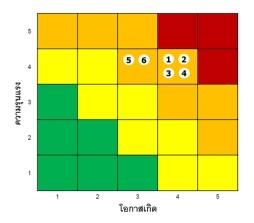
Risk Assessment
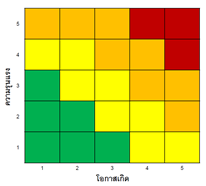
The Company conducts human rights risk assessment by using 5x5 risk matrix to identify risk level of human rights issue, considering from 2 dimensions, that is; severity and likelihood, and divided risk of human rights issue into 4 levels as follows;
|
|
Preventive Measure and impact reduction on human right of high-risk issues
High Risk Issues | Preventive Measure and Impact Reduction | Integration and implement |
Privacy of Customer Information |
|
|
Privacy of Employee Information |
| |
Privacy of Supplier Information |
| |
Occupational Health and Safety of Employees |
|
|
Community Health and Safety |
|
|
Consumer Health and Safety |
|
|
Due Diligence Document Link
https://sustainability.globalhouse.co.th/en/document/viewer/75/human-rights-due-diligence-policy
Employees — Plan & Guidelines
Has an Employee Management Plan
Yes
Plan Description
The company has intention to manage the human resources according to the good corporate governance principle by determining the personal strategy since recruitment, employee’s development and employee retention together with supporting employees equal for career growth and advancement without restrictions on gender, nationality, and religion. The company emphasizes on Knowledge and ability development as well as encourages employees to be good citizen with volunteer spirit, make public and social benefit following to the Human Resource Management Policy of the company “GBH Smart People”
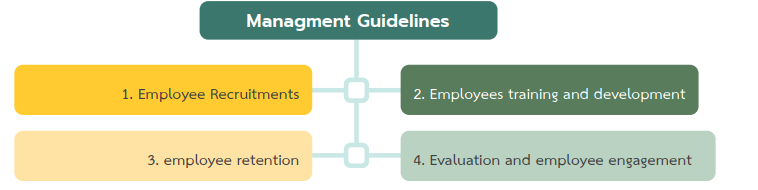
Plan Areas
| Plan Area |
|---|
| Fair employee compensation |
| Employee training and development |
| Promoting employee relations and participation |
| Child labor |
| Occupational health and safety in workplace |
Employees — Workforce
Introduction
Employee Recruitments
In alignment with the Company’s main business operation plan, which focuses on continuous store expansion each year, employee recruitment is conducted in advance to ensure sufficient staffing to support operations. The Company prioritizes local hiring in areas where new stores are opened to support local economic and workforce development. Internal recruitment is also encouraged to facilitate employee transfers back to their hometowns.
Employees Statistics 2025
New Employee Hires Information | 2022 | 2023 | 2024 | 2025 |
Average Hiring Cost/FTE (Baht/person) | 830.78 | 659.31 | 718.89 | 731.77 |
Percentage of Internal Hires (%) | 18.60 | 18.58 | 13.90 | 11.68 |
Total number of new employee hires (person) | 3,984 | 5,051 | 4,949 | 5,271 |
Furthermore, the company has promoted career building for disadvantaged peoples by giving the cooperation and supporting the employment policy of the government sector such as Elderly Employment, Disability Employment, New Graduated Employment (Co-payment Project), with the performance of the past years as follow;
Co-Payment Project
The Company has continuously supported and promoted the employment for new graduates. In 2025, the company has employed new graduates total 585 persons
GBH happy mind near home
The company supports and gives employees an opportunity to transfer back to their hometowns under the “GBH happy mind near home” project, in order to encourage employees to back to take care of their family and happy work. In the year 2025, there are total numbers of employees who has joined this project 148 persons
Elderly Employment
To support the Aging Society, the company has encouraged Elderly Employment for people aged 60 or older and be ready to work by providing the proper work with elderly work capacity. In the year 2025, there are total 66 elders working at the company in total 40 stores.
Employees with Disabilities — Introduction
The company gives the importance and supports Disability Employment with respect to Empowerment of Persons with Disabilities Act, B.E. 2550 (2007) and the revised Disabilities Empowerment Act (No.2), B.E. 2556 following to the article 33 and 35. Anyhow,
In 2025, the company employed people with disabilities in various departments and provided spaces for the sale of government lottery, employing a total of 113 individuals, represents 0.92% of the total workforce, which consists of 12,342 employees. The company has fully contributed funds to the disability welfare reserve fund to promote and enhance the quality of life for people with disabilities.
Workforce Data
| Metric | Current Year | Previous Year | Two Years Ago |
|---|---|---|---|
| Total number of employees (Persons) | 12,342 | 11,534 | 10,985 |
| Number of male employees (Persons) | 7,058 | 6,579 | 6,248 |
| Number of female employees (Persons) | 5,284 | 4,955 | 4,737 |
| Total employment of disabled persons (people) | 113 | 107 | 102 |
| Total disabled employees (people) | 85 | 85 | 79 |
| Total male disabled employees (people) | 54 | 54 | 39 |
| Total female disabled employees (people) | 31 | 31 | 40 |
| Total disabled workers who are non-employee (people) | 28 | 22 | 23 |
| Contributions to the fund for promoting and improving the quality of life for disabled persons | 1 | 1 | 1 |
| Total number of male employees in operational level (Persons) | 5,563 | 5,100 | 4,845 |
| Total number of male employees in management level (Persons) | 1,485 | 1,469 | 1,393 |
| Total number of male employees in executive level (Persons) | 10 | 10 | 10 |
| Total number of female employees in operational level (Persons) | 4,260 | 3,979 | 3,845 |
| Total number of female employees in management level (Persons) | 1,019 | 973 | 889 |
| Total number of female employees in executive level (Persons) | 5 | 3 | 3 |
Employees — Remuneration & Provident Fund
Introduction
The consideration of remuneration for the employees, the company has paid remuneration in accordance with the Company’s performance each year and also considering from the competency assessment of individual employees and the performance of each segment to be in accord with performance both in short term and long term. In addition, the Company has provided the provident fund for employees care in long term
Short-term employee benefits
The Company has determined the employee compensation in salary, bonus, social security fund contribution, special compensation relevant to professional skills and performance, etc. which the Company has a performance assessment system every quarter (total 4 times per year). And take the assessment results to consideration of bonus payments and annual adjustment, including adjustment of promotion and remuneration according to the qualifications and abilities. In addition, the Company has special adjustments during year for employees with excellent performance and qualifications as specified.
Remuneration & Provident Fund
| Metric | Current Year | Previous Year | Two Years Ago |
|---|---|---|---|
| Total disabled employees (people) | 2,188,142,936 | 2,045,018,901 | 1,993,634,283 |
| Total male employee remuneration (Baht) | 1,209,188,456 | 1,128,433,149 | 1,144,398,901 |
| Total female employee remuneration (Baht) | 978,954,480 | 916,585,752 | 849,235,382 |
| Number of employees eligible to participate in PVD (persons) | 10,942 | 10,365 | 9,724 |
| Total number of employees joining employee provident fund (Persons) | 10,942 | 10,365 | 9,724 |
| Percentage of total number of employees joining employee provident fund to total number of employees (%) | 88.66 | 89.86 | 88.52 |
| Number of PVD members / Total eligible employees (%) | 100 | 100 | 100 |
| Total amount of provident fund contributed by the Company (Baht) | 66,549,712 | 61,386,392 | 54,439,901 |
| Total amount of provident fund contributed by employee (baht) |
Employees — Training & Development
Introduction
The company places importance on employee development to enhance their potential and increase efficiency in their work. Content selection for training courses is tailored to align with the nature of the business and is in line with external factors that may impact the business at that time.
Details of the Employee Training Course
Course Name | Total Hours |
Management Guidelines for 2025 | 456 |
Operational Readiness for Climate Change Act Compliance and Risk Management | 4,291 |
Enhance job skills for General Manager and Division Manager | 11,760 |
Leveraging AI to Enhance Service Excellence | 700 |
Good management of manager., Self-Development through Mindset Transformation | 777 |
Enhancing Product Knowledge and Sales Confidence | 1,760 |
Workplace Motivation Development | 10,301 |
Service Mind and Service Excellence Development | 13,739 |
Modern Service and Sales Professionals | 29,244 |
Teamwork and Communication Techniques for Effective Collaboration | 2,782 |
Safe and Efficient Forklift Operation and Maintenance | 5,484 |
Crane Operator, Signal Person, Material Adhesives, or Crane Supervisor for Fixed and Mobile Cranes | 6,120 |
Professional Customer and Complaint Handling Process | 770 |
Review of Work Processes, Store Standards, and Service Excellence | 2,746 |
Developing Effective Communication Skills for Sales | 5,539 |
Employee Development
Development and Enhancement Program for Store Managers.
The company aims to develop and enhance the capabilities of the store management team, which is a crucial mechanism in managing store operations, encompassing both sales and service aspects. Additionally, the company focuses on ensuring the effectiveness and success of the human resources team in each store. The development plans are outlined as follows :
Target group | Development Topics | Outputs and Benefits |
High potential talent selected based on the past performance and qualified as specified criteria. |
. Retail sale and structure sale department . Store support and central department
|
|
New Young Management Trainee Program
The Company promotes and creates opportunities for both fresh graduates and experienced employees who are eager to learn, practice, and develop themselves in the retail business field. This is aimed at enhancing their potential and preparing them for career growth, making them valuable assets for the store management team in the future.
Started program since 2015until 2025
There are 9classes at present, total 68participants.
Total 17 promoted employees in position of assistant stores manager and other departments.
Target Group | Development Topics | Outputs and Benefits |
New employees qualified as specified criteria and have flexibility working in stores |
|
|
Collaboration project with educational institutions.
The company has consistently expanded its collaboration and development efforts with educational institutions. In 2024, it entered into a Memorandum of Understanding (MOU) with Mahasarakham University and Sakon Nakhon Rajabhat University regarding joint production of graduates and cooperative education programs, as well as Cooperative Work Integrated Education: CWIE and academic collaboration. By linking classroom knowledge with real-world work experiences within the organization, the aim is to develop the characteristics and skills of students to align with the requirements of business sector. Currently, more than 12 educational institutions from 9 fields of study participate in the support program and collaborate in producing graduates. Over 234 students are involved in internships and experiential learning from actual work environments.
Furthermore, the company has also engaged in sharing and exchanging experiences related to essential skills and attributes required in current business operations with educational institutions and other interested organizations. For instance, with Roi Et Rajabhat University, Sakon Nakhon Rajabhat University and Mahasarakham Rajabhat University, the company collaborates to develop the skills of graduates in various fields to meet the future needs of the business sector
Training Data
| Metric | Current Year | Previous Year | Two Years Ago |
|---|---|---|---|
| Average employee training hours (Hours / Person / Year) | 8.87 | 9.45 | 8.59 |
| Employee development and training expenses (baht) | 3,232,648.1 | 3,267,964.31 | 1,799,219.5 |
Employees — Occupational Health & Safety
Introduction
The company realized that good sanitation and safety in working environment will promote the efficiency in working and build trust to all stakeholders. Thus, the company gives the importance to the management guidelines for occupational health and working environment for safety to employees and all stakeholders.
Goals Commitment and Goals
The company has intention to operate business without the occurrence of accidents by setting target “Zero Accident” to persuade employees realize to the importance and work carefully, without accidents which cause of injuries from the working in every activity of operations. By defining the relevant target as follow ;
Every year: 0 Fatality of Employees
Every year: 0 Occupational Illness Frequency Rate of Employees
Within 2028: Less than 1.0 Lost Time Injury Frequency Rate of Employees.
Management Guidelines
The company has determined the safety management guidelines by taking the safety principle and occupational health to apply in operation activities as follows;
Comply with a laws, regulations, and guidelines with regard to health and safety either being noticed in present and going to be noticed in the future.
Risk assessment in activities related to the operations such as conflagration, product storage, machine using, forklift and equipment, chemicals, and electrical system, etc.
Determine the proper preventive measures and provide safety equipment completely, sufficient and always ready to use, by preparing the Personal Protective equipment: PPE, namely Back support, safety shoe, helmet, gloves, reflective vest for employees in all stores and determining to wear every time while working.
Build the organizational safety culture and encourage knowledge as well as cultivate consciousness regarding health and safety to employees and concerned persons through channels and activities such as training for giving knowledge, safety activities, public relation through various channels, etc.
Prepare an emergency plan for fire prevention and fire suppression and annual firefighting and evacuation fire drill by determining that all employees need to participate in the activities.
Enhancing Occupational Health and Creating a Safe Work Environment
The Company is committed to enhancing Occupational Health and Safety (OHS) and fostering a safe work environment. It aims to achieve zero work-related injuries, occupational illnesses, and road traffic accidents by 2028. To support this goal, the Company implements a comprehensive safety management system in compliance with applicable laws and regulations, continuously improving work areas, operating procedures, tools and machinery, and workplace conditions. The Company also promotes safety awareness and encourages active employee participation to strengthen its safety culture and continuously improve safety performance.
The Company has established a Safety Policy to serve as a guideline for managing Occupational Health and Safety (OHS) in alignment with its defined standards and objectives. A dedicated Safety Committee, workplace safety officers, management levels, supervisors, professionals, together with all employees, actively collaborate to develop and drive operations in accordance with the Company’s goals and to foster a strong safety culture. Through organization-wide participation, the Company continuously advances OHS performance toward ongoing and sustainable development.
In 2025, the Company actively implemented Occupational Health, Safety, and work environment initiatives. These efforts included continuous improvements to workplace conditions and the promotion of active participation by all employees in the Company’s safety initiatives, as outlined below:
1. Participation in the “Outstanding Workplace in Labor Relations and Welfare” program.
The Company recognizes the importance of effective labor relations management in fostering a safe, inclusive, and equitable workplace that promotes Diversity and ensures equal treatment for all employees.
The Company also aims to minimize conflicts of interest between the Company and employees, encourage transparent communication, and cultivate mutual trust and positive attitudes in workplace management. In addition, the Company emphasizes the enhancement of its employee welfare management system beyond legal requirements.
The Company has participated in the program and has received the “Outstanding Workplace in Labor Relations and Welfare” Award for more than 10 consecutive years. A total of 68 Store have taken part in the program.
2. Safety Excellence Recognition Program for Employees
The Company organized the “Global House Safety Excellence Employee” program in recognition that workplace safety is a key driver of operational efficiency. The program aims to strengthen employees’ safety awareness, reduce workplace accidents, and foster a sustainable safety culture across the organization.
It also serves as an incentive to encourage safe work practices and to recognize employees who consistently demonstrate safe behaviors and actively participate in safety activities.
3. The project of cultivating a conscious mindset on occupational safety.
The Company organized the “Global House Safety Month” campaign to cultivate safety awareness and reinforce the importance of occupational safety among all employees. The initiative encourages participation at all levels in accident prevention, aims to reduce losses to life, health, and property, and promotes the practical application of safe work practices in operational areas and work processes. The project also serves to enhance learning, engagement, and motivation, strengthening a sustainable safety culture throughout the organization.
4. Safety Patrol Project
The Company places importance on regularly monitoring working conditions, work practices, and compliance with safety measures to identify potential hazards, unsafe conditions, and unsafe behaviors. Corrective and preventive actions are promptly implemented to mitigate risks before incidents occur.
This proactive approach helps reduce losses to life and property, while promoting a sustainable safety culture across the organization.
5. Safety Talk communication project
The Company promotes understanding, provides knowledge, and raises safety awareness among all employees through pre-work safety talk communication conducted prior to the commencement of work. These sessions emphasize safe work practices, hazard awareness, proper use of Personal Protective Equipment (PPE), and strict compliance with safety regulations to prevent accidents and strengthen the safety culture. Employees are also encouraged to participate in identifying potential risks and reviewing preventive measures within their work processes to enhance overall safety performance.
6. Kiken Yoshi Training (KYT)
The KYT program has been continuously implemented over the years and is conducted at every shift prior to the commencement of operations. Executives, managers, supervisors, and safety officers lead the sessions by providing safety-related information to employees, along with guidance on other relevant operational matters. These include customer service practices, correct and safe work procedures, identification of high-risk areas in operations and service activities, as well as clarification of service issues, appropriate solutions, and response measures for various situations.
7. Employee Welfare Project
Relax area
Providing seating areas and book corners for relaxation and stress relief for employees during break times, including organizing activities to promote mental well-being and stress relief, such as making merit, and various festive activities, regularly every year.
Creativity in sports and health
Promoting exercise and sports competitions for employees both within and outside the company. Additionally, encouraging employees to take care of their health by organizing regular physical health check-ups and providing health education.
8. Family Welfare Project
Provision of lactation facilities (“Mother’s Corner”) to support breastfeeding, along with postnatal visits to enhance morale and strengthen positive relationships.
Provision of a designated playground to support and serve employees’ children and visitors.
Welfare for caring employees who give birth or take sick leave, including employees and families who have passed away, administered through the Welfare Committee and company representatives.
Occupational Health & Safety Data
| Metric | Current Year | Previous Year | Two Years Ago |
|---|---|---|---|
| Total number of lost time injury incidents by employees (Cases) | 82 | 77 | 106 |
Employees — Labour Relations
Labour Relations — Introduction
The company has conducted an Employee’s Engagement Survey as a means to gather feedback and suggestions from employees. The company analyzed the survey data and results to formulate plans for addressing relevant issues and communicated the outcomes to employees across the organization. This aim to enhance employee satisfaction and engagement with the organization. As a result, in 2025, the employee engagement survey score was 91.13%, which is higher than set target. A total of 11,207 employees participated, representing 94.73% of the total workforce. According to the survey results, the top 3 factors that are important to employees in their work remain consistent with those in 2024, including; stable and reputable company, proximity of the workplace to home, and a good balance of family time with competitive income. In addition to these key factors, further suggestions on various issues were gathered. These inputs are beneficial for the company to consider and take appropriate actions, tailored to the specific areas and relevant departments.
Labour Relations Data
| Metric | Current Year | Previous Year | Two Years Ago |
|---|---|---|---|
| Total voluntary resignations (Persons) | 2,202 | 2,104 | |
| Male employees who voluntary resigned (Persons) | 1,330 | ||
| Female employees who voluntary resigned (Persons) | 872 | ||
| Percentage of employee turnover leaving the Company voluntarily (%) | 17.84 | 19.81 | 19.15 |
| Evaluation result of employee engagement | 1 | 1 | 1 |
Employees — Employee Representation
Introduction
Freedom of Association
The company promotes and provides freedom of expression and integration for employees, as well as processes and channels for listening to opinions and concerns through various channels such as the Voice of Employee program, the call center system, and the complaint center. These channels cover various fields, including suggestions and opinions shared through the Welfare Committee, which is considered an important mechanism for employee participation.
The company has promoted the participation of employees in collective action and has the power to collectively bargain on various related issues. A welfare committee has been established to represent employees in consultations, recommend, inspect, and supervise welfare arrangements, including managing suggestions and issues related to welfare and the working environment.
The welfare committee will be nominated and selected by electing employees in each branch area, covering 100% of the staff, to act as employee representatives. The elected welfare directors will hold office for a term of 2 years and will hold meetings with branch executives and the company at least once a quarter in accordance with the Labor Protection Act B.E. 2541.
Currently, the company’s welfare committee covers all branch areas, comprising a total of 91 committees and 621 members. By implementing guidelines to improve issues related to welfare and the working environment, aiming to support well-being and enhance the quality of life at work for all employees in a fair and equal manner.
In 2025, there were approved suggestion issues for additional actions as follows :
Employee welfare: 520 issues
Working environment: 349 issues
Tools and equipment for work: 235 issues
Employee activities: 475 issues
Employees Are Represented Collectively
Yes
Forms of Representation
| Form |
|---|
| Welfare committee |
Employees — Targets
Has Set Employee Targets
Yes
Targets
| Indicator | Target Areas | Target Year | Target Year — Description |
|---|---|---|---|
| Average number of training hours of all employees (hours per person) | 2984 · Description: Employee training and development · 2988 · Description: Safety and occupational health at work | 2,025 | Average number of training hours of all employees (hours per person) >8.5 |
| Lost time Injury Rate per store | 2988 · Description: Safety and occupational health at work | 2,025 | Lost time Injury Rate per store <1.0 |
Employees — Performance & Outcomes
Has Performance Results
Yes
Performance Description
Fair Labor Practice
The Company is committed to respect for human rights and fair Labor practice of employees, in alignment with relevant laws and policies under the Thai Labor Protection Act such as employment, wages, working hours, holidays, and welfare, as well as ensuring a good and safe working environment. Anyway, the Company provides the following welfares:
Welfare | Legal Entitlements | Welfare provided by the Company |
Maternity Leave - Female Employees | 120 days | 120 days |
Additional Childcare Leave (Child Illness) – Female Employees | Up to 15 days | Up to 15 days |
Paternity Leave (Spouse Support after Childbirth) – Male Employees | Up to 15 days | Up to 15 days |
Holiday | Not less than 13 days per year | 14 days |
Annual Leave | Not less than 6 days per year | 6-15 days |
Personal Leave | 3 days | 12 days |
Furthermore, the Company provides a variety of welfare benefits to enhance employees’ overall well-being while working with the Company, such as employee loan programs, relaxation areas, and lactation rooms.
In addition, the Company offers life security benefits, including a provident fund, life insurance, and financial assistance in cases of emergencies.
Customers — Plan & Guidelines
Has a Customer Management Plan
Yes
Plan Description
Commitment
Siam Global House Public Company Limited conducts business operations in accordance with the principles of good corporate governance, transparency, and fairness toward all stakeholders. The Company recognizes customers as major stakeholders and places the highest priority on fostering long-term customer satisfaction and trust in a sustainable manner. This commitment is demonstrated through responsible oversight of marketing practices and service delivery across all areas of operation.
The Company has established guidelines requiring employees at all levels to provide accurate, complete, and verifiable information on products and services, without concealing or disseminating misinformation that may cause misunderstandings or affect customers’ decision-making. The Company also places importance on fair communication and respect for customers’ rights at every stage of service. These practices aim to build customer trust, enhance customer engagement, and foster long-term relationships, while supporting the Company’s commitment to social responsibility and sustainable development.
Management Guidelines
Ensure accurate, transparent, and fair information for goods and services while protecting consumer rights.
Enhance product quality and service standards to build customer satisfaction and trust.
Listen to customer feedback and complaints to drive continuous operational improvement.
Develop and expand digital sales and service channels to increase customer convenience and accessibility.
Monitor and assess customer satisfaction to leverage data for sustainable development.
Plan Areas
| Plan Area |
|---|
| Communication of product and service impacts to customers/consumers |
| Development of customer satisfaction and customer relationship |
Customers — Satisfaction Results
Introduction
Customer Satisfaction
The Company has continuously developed and enhanced its customer satisfaction management processes by conducting customer satisfaction surveys and providing various channels for customer feedback, suggestions, and complaints. The information gathered is analyzed and applied to improve products, service development, and overall business processes, thereby increasing operational effectiveness. Through these initiatives, the Company aims to enhance the overall customer experience, build impressions, and foster sustainable customer satisfaction. These efforts contribute to customer trust and encouraging repeat visits on a consistent and long-term basis.
Customer Satisfaction
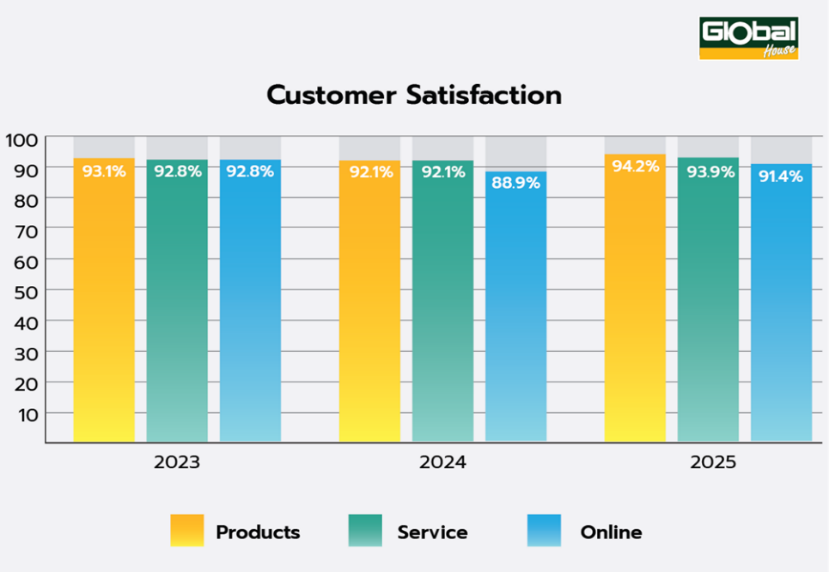
Customer Satisfaction Results
| Metric | Current Year | Previous Year | Two Years Ago |
|---|---|---|---|
| Evaluation results of customer satisfaction | 1 | 1 | 1 |
Customers — Targets
Has Set Customer Targets
Yes
Targets
| Indicator | Target Areas | Target Year | Target Year — Description |
|---|---|---|---|
| Customer Satisfaction | 3009 · Description: Development of customer satisfaction and customer relationship | 2,025 | Customer Satisfaction = 95% |
Customers — Performance & Outcomes
Has Performance Results
Yes
Performance Description
Operating
1. Customer Responsibility
Pre-Sales Services
The Company places importance on pre-sales services, fair marketing principles, and consumer protection. The procedures are as follows:
Provide accurate, complete, clear, and verifiable information about products and services to support customers in making appropriate decisions.
Provide advice on product features, proper usage, limitations, and precautions, including potential risks, together with appropriate safety measures.
Promote employees to provide advice with primary consideration given to customers’ needs and suitability, in order to build confidence and trust in products and after-sales services.
After-Sales Services
The Company is committed to continuously enhancing after-sales services to ensure customer satisfaction and long-term relationships. The procedures are as follows:
Provide product delivery and installation services for a wide range of products in accordance with the Company’s standards and conditions, including post-installation warranties.
Provide repair services for House Brand products in accordance with specified terms and conditions. For products covered under manufacturer warranties, the Company coordinates with manufacturers and monitors on the repair process until completion.
Establish a product return policy within a specified period, not exceeding 30 days from the purchase date, to enhance customer confidence and reduce purchasing concerns.
Provide channels for receiving customer complaints and suggestions, which are analyzed and used to continuously improve product quality and service performance.
Community & Social — Plan & Guidelines
Has a Community & Social Plan
Yes
Plan Description
The Company realizes to the role of participation in social value creation, aims to enhance the people’s quality of life and strengthen the economy of community, together with operates business by considering social responsibility, based on the balanced mutual value creation with stakeholders.
Management Guidelines
The Company supports and promotes the use of business processing in creating multiple value to society and community through the projects and activities, such as; generating income for small entrepreneurs, promoting distribution channels for agriculturist group, and strengthening skills and knowledge to students for better quality of life, as well as promoting employees to participate in volunteer working with the communities.
Plan Areas
| Plan Area |
|---|
| Employment and professional skill development |
| Education |
| Religion and culture |
| Occupational health, safety, health, and quality of life |
| Disadvantaged and vulnerable groups |
Community & Social — Targets
Has Set Community & Social Targets
Yes
Targets
| Indicator | Target Areas | Target Year | Target Year — Description |
|---|---|---|---|
| Number of technicians in the Chang-Dee project (persons) | 3036 · Description: Employment and professional skill development | 2,029 | 4200 persons |
Community & Social — Performance & Outcomes
Has Performance Results
Yes
Performance Description
Community Opportunity and Development Project
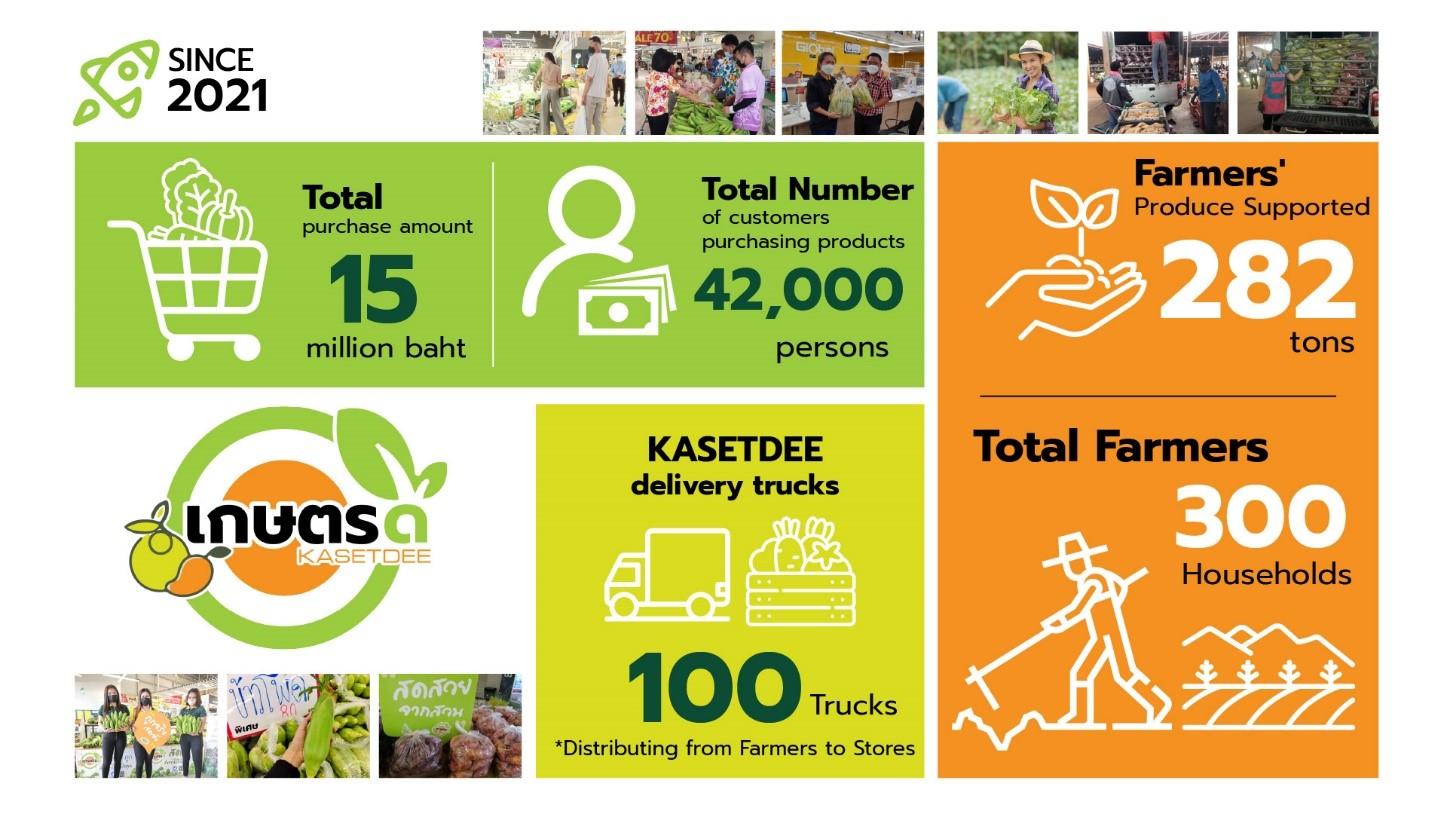
1. Promoting the distribution channels of products for agriculturist group through “Sharing Happiness, creating smile and Kasetdee Platform project”
Regarding economic conditions and circumstances affect farmers as they can sell fewer products. There are no areas for selling agricultural products, and some areas have oversupply of agricultural products. Therefore, the Company has established “Sharing happiness, creating smile project” to be a part to relieve problem of farmers. The Company purchases agricultural products in area of Nakhon Ratchasima province, such as; sweet corns, sweet potatoes, bananas, peanuts, and taros, etc. and distributes to “Happiness sharing area” of each store to provide consumers in different areas with the opportunity to access agricultural products that are good quality and safe for consumers in fair price, and also provide more than 10,000 of our employees at each store to consume goods
In addition, the Company also supports small courier entrepreneurs who registered through the Company’s transportation service platform for more than 1,000 entrepreneurs to deliver products to its stores of the Company for all the year.
Furthermore, the Company has developed “Kasetdee” Platform with its intention to be another channel to support and facilitate agriculturists or small entrepreneurs who are interested, to offer their agricultural products fast and efficient to the Company. Form the aforesaid projects, the Company supports and distributes agricultural products through “Kasetdee platform”
2.Promoting Hommali Rice distribution project for Kasetwisai Agricultural Cooperatives
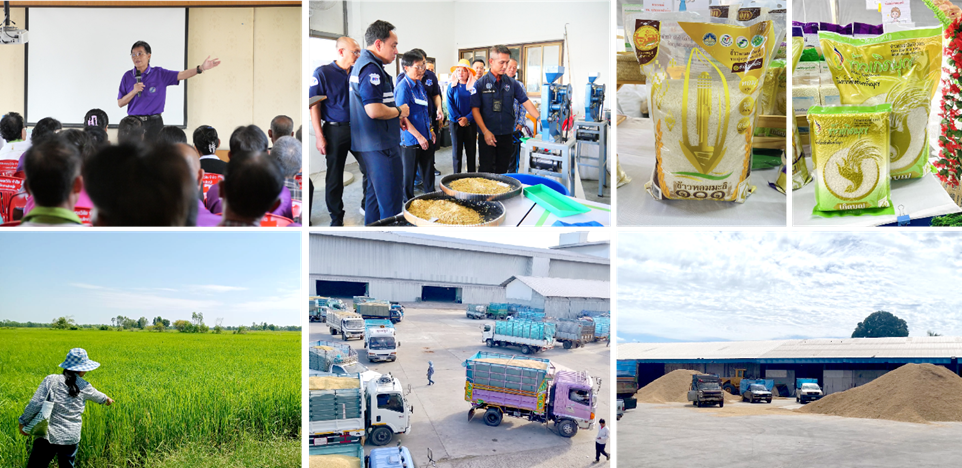
Thung Kula Rong-Hai Hom Mali Rice is the excellent jasmine rice and product champion of Roi-et for long times, but agriculturists face the falling price of rice problem and the inability to export to foreign countries, resulting rice buffer stocks in Roi-Et area. Thus, to relieve rice buffer stocks problem of agriculturists, the Company have purchased Hom Mali Rice in 5 kg package, from Kasetwisai Agricultural Cooperatives, in number of 36,047 bags or 180 tons, and distributed to “Happiness Sharing Area” of all 95 stores over the country, which have received well feedback.
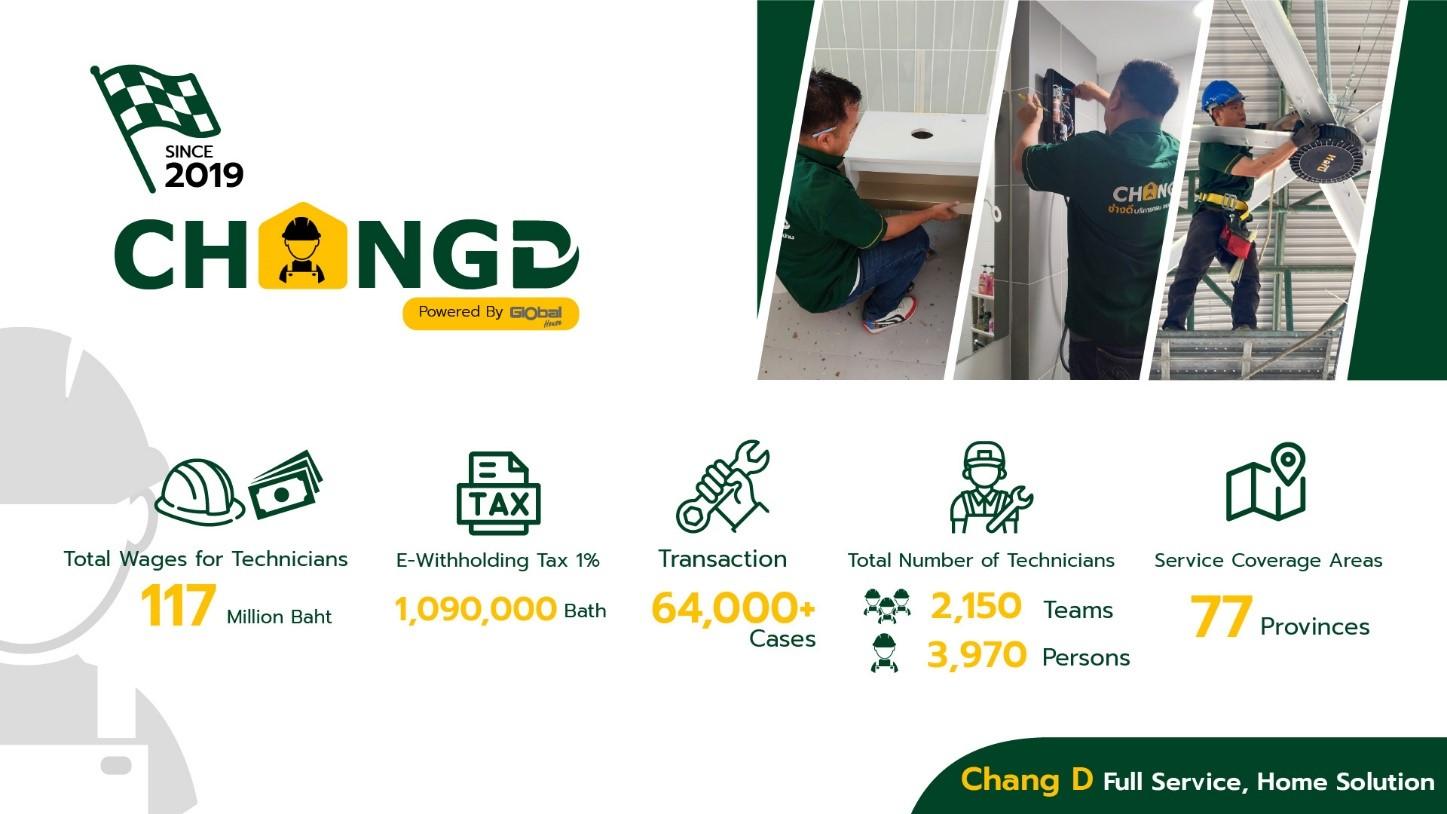
3. Generating Income for small entrepreneurs “Changdee Project”
The Company is committed to improving quality of life and promoting well-being in the communities where it operates 96 stores nationwide. To support local economic development, the Company established the “Changdee Project” to create income opportunities for local technicians and small entrepreneurs. The project enables participants to undertake more than 70 types of installation services, including electrical appliances, electrical systems, sanitary ware, water pumps, solar cells, digital door locks, automatic doors, garages, and kitchen equipment, in collaboration with business partners, including Mitsubishi, Samsung, Haier, Midea, C Hi-Tech, and SCG.
Currently, a total of 2,150 technician teams have joined the Company across all 96 stores, covering more than 77 provinces nationwide. In 2025, participating technicians generated income from over 64,000 installation service orders. Each year, technicians receive continuous training from the Department of Skill Development and partner brands to enhance their technical skills. In addition, the Company expands the number of installation teams annually to ensure sufficient capacity to meet customer demand.
Other Social Management
Plan & Outcomes — Description
Corporate Social Responsibility (CSR)
The Company has always supported activities that benefit society whether in form of a grant donations or giving cooperation with the public and private sectors through 96 stores. In 2025, the Company supported activities amounted to Baht 35,352,433.42 with details as follows:
Education and Youth
The company has provided goods to be used as educational materials for various educational institutions, including supporting opportunities for learning and quality education.
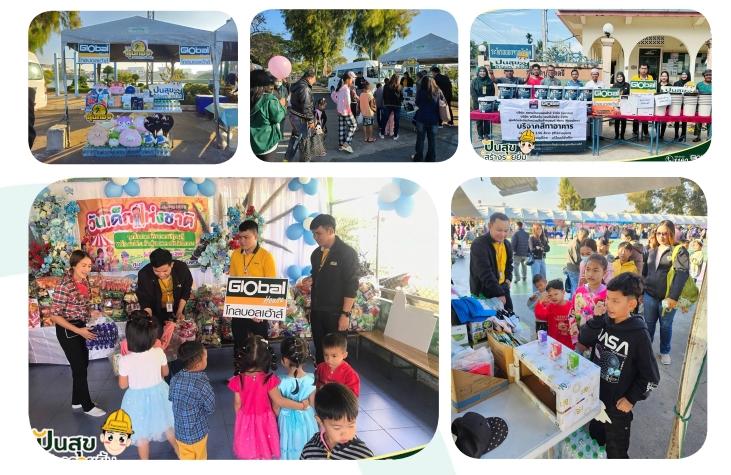
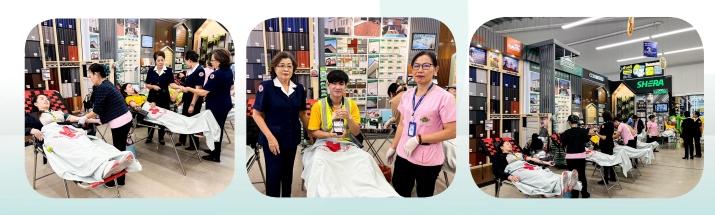
Blood Donation Activities
The company promotes employee health care and boost immune system by organizing regular blood donation events for the Thai Red Cross Society every year.
Religious Activities
The company promotes the participation of executives and employees in religious activities regularly. This includes organizing activities such as Kathin Robe offering ceremony, making merit on various occasions, donating money and providing goods for the construction and restoration of temples, parsonage, and meditation halls

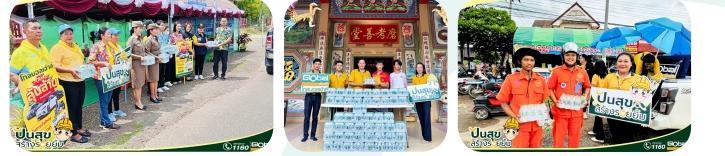
Grant drinking water “LAMAYON” brand
To support various activities of both government and private sectors through stores.
Law Violation Incidents
Law Violation Incidents
| Metric | Current Year | Previous Year | Two Years Ago |
|---|---|---|---|
| The total number of cases or incidents of significant violations of laws or regulations regarding social and human rights (Cases) | 0 | 0 | 0 |
| The total number of cases or incidents that cause significant labor disputes (Cases) | 0 | 0 | 0 |
| The total number of cases or complaints related to consumer rights violations (Cases) | |||
| The total number of cases or complaints related to partner rights violations (Cases) | |||
| The total number of cases or incidents that cause disputes with the community/society (Cases) | |||
| The total number of cases or incidents related to cyber security or customer data breaches (Cases) | |||
| The total number of cases or incidents related to safety and occupational health at work (Cases) |